West Memphis, Arkansas · 1993–present Flip through the photo plates, then walk the file page by page. Every entry names its source.
SUBJECTS: ECHOLS · BALDWIN · MISSKELLEY — WEST MEMPHIS, ARKANSAS
Case Closed
🚶 Walk the File
Travel the case the way an investigator reads it — front to back, one page at a time, from May 5, 1993 to April 18, 2024.
13 pages · tap, swipe or use the arrows · every page sourced
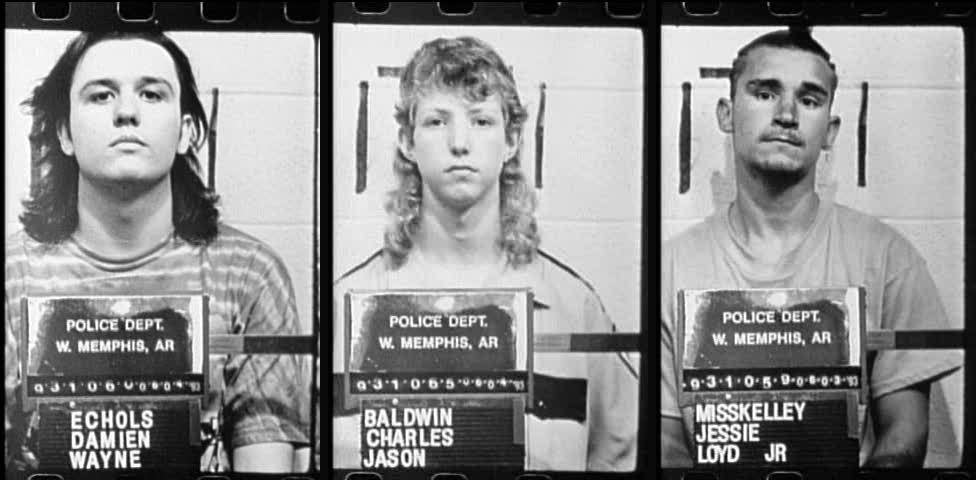
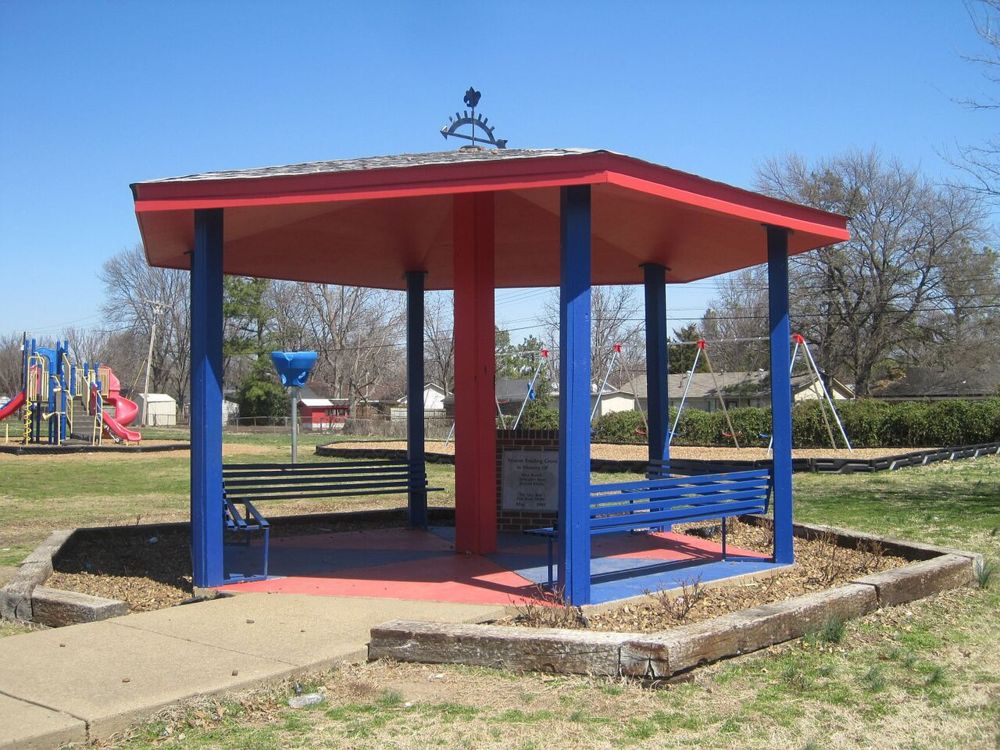
Plate 1 — The memorial. A gazebo built in memory of Steven, Christopher and Michael stands on the playground of their elementary school in West Memphis. Photo: Thomas R Machnitzki · CC BY 3.0 · Wikimedia CommonsPlate 2 — June 1993. Booking photographs taken by the West Memphis Police Department after the arrests, left to right: Damien Echols, Jason Baldwin, Jessie Misskelley Jr. — ages 18, 16 and 17. Police records, via the public case archivePlate 3 — After. Damien Echols in Austin, Texas, in 2012 — the year after his release from death row. Photo: Larry D. Moore · CC BY 4.0 · Wikimedia Commons
Document Plate
SUPREME COURT OF ARKANSAS
No. CR 08-1493 · Damien Wayne Echols v. State of Arkansas
Opinion delivered November 4, 2010 — 2010 Ark. 417
"Reversed and remanded" — the ruling that ordered a hearing on the DNA evidence and set the 2011 release in motion.
Photographs are used under the Creative Commons licenses credited on each plate, via Wikimedia Commons. Booking photographs are West Memphis Police Department records, via the public case archive (callahan.mysite.com). Court opinions are public records. CrowdSleuth does not publish crime-scene or autopsy imagery.
At a glance
Location Robin Hood Hills, West Memphis, Arkansas Crime date May 5, 1993 Victims Steven Branch, Christopher Byers, Michael Moore — all age 8 Convictions 1994 — capital murder (Echols, Baldwin); first- & second-degree murder (Misskelley) Sentences Echols: death · Baldwin: life without parole · Misskelley: life plus 40 years Released August 19, 2011, under Alford pleas (time served + 10-year suspended sentences) Record status The convictions remain in place under the 2011 pleas, in which each man maintained his innocence. Per the Arkansas Supreme Court's most recent opinion in this file (April 2024), litigation over advanced DNA testing continues in circuit court.
The victims
Steven Branch, Christopher Byers and Michael Moore were eight years old, second-graders, and members of the same Cub Scout troop in West Memphis. They were last seen together on the afternoon of May 5, 1993, and were found the following day in the Robin Hood Hills woods. The court records linked from this file contain the forensic details of their deaths; this summary does not reproduce them.
Source: Echols & Baldwin v. State, Arkansas Supreme Court opinions (linked in Documents).
The timeline — full text
May 5, 1993Branch, Byers and Moore are last seen in their West Memphis neighborhood and are reported missing that evening. — Echols v. State, 2010 Ark. 417 READ OPINION
May 6, 1993The boys are found deceased in the Robin Hood Hills woods. — 2010 Ark. 417 READ OPINION
June 3, 1993Jessie Misskelley Jr., 17, is questioned by police — an interrogation reported to have lasted about 12 hours — and gives a recorded statement implicating himself, Damien Echols, 18, and Jason Baldwin, 16. All three are charged with the murders.
The booking photographs, West Memphis Police Department, June 1993 — Echols, Baldwin, Misskelley. Police records, via the public case archive.
Exhibit — The StatementThe June 3, 1993 recorded statement is part of the trial record. Because it named all three, Misskelley was tried separately — his statement could not be used in the others' trial. Full transcripts are in the public case archive (Documents, below). 🎙️ Listen to the taped statement & read along with its transcript →
February 1994Tried separately, Misskelley is convicted of one count of first-degree murder and two counts of second-degree murder, and sentenced to life imprisonment plus 40 years. — 2010 Ark. 417 READ OPINION
March 1994Echols and Baldwin are convicted of three counts of capital murder. Echols is sentenced to death; Baldwin to life imprisonment without parole. The prosecution's trial theory included claims of occult ritual. — 2010 Ark. 417; case overview READ ARTICLE
1996 – 1997The Arkansas Supreme Court affirms all three convictions on direct appeal (Misskelley v. State, 323 Ark. 449; Echols v. State, 326 Ark. 917). The U.S. Supreme Court declines to review Echols's case on May 27, 1997. — as recited in Echols v. State, 2024 Ark. 61 READ OPINION
2004 – 2007Under agreed court orders, DNA testing is performed (December 2005 – September 2007). As later recited by the Arkansas Supreme Court: none of the three men was the source of any biological material tested. A hair recovered from the ligature used to bind Michael Moore was found to be consistent with Terry Hobbs, Steven Branch's stepfather; a hair recovered from a tree stump near where the bodies were found was consistent with David Jacoby, a friend of Hobbs. — 2024 Ark. 61 READ OPINION
April 14, 2008Echols files a motion for a new trial based on the DNA results. On September 10, 2008, the circuit court denies it without holding an evidentiary hearing. — 2024 Ark. 61 READ OPINION
November 4, 2010The Arkansas Supreme Court reverses, holding the circuit court applied the wrong legal standard, and orders an evidentiary hearing at which the DNA results are to be considered with all other evidence. — 2010 Ark. 417 READ OPINION
August 19, 2011Before the ordered hearing takes place, the State and the three men reach a negotiated resolution. Each enters an Alford plea — pleading guilty while maintaining his innocence — and is sentenced to time served (18 years, 78 days) plus a 10-year suspended sentence. Judge David Laser accepts the pleas, and all three are released the same day.
Exhibit — The PleaAn Alford plea (from North Carolina v. Alford, 400 U.S. 25) lets a defendant plead guilty while maintaining innocence, acknowledging the State has evidence it would present at trial. The pleas left the convictions in place; they were not exonerations.
2021Echols sues the West Memphis Police Department under the Arkansas Freedom of Information Act after learning that case evidence may have been lost or destroyed; a court orders the department to respond. The ligatures used to bind the victims are ultimately located at the department. — 2024 Ark. 61 READ OPINION; Talk Business & Politics READ ARTICLE
2022Echols petitions for advanced DNA testing of the ligatures using newer collection technology (the M-Vac system). Circuit Judge Tonya Alexander denies the petition, ruling that because Echols is no longer in state custody he cannot seek testing under Act 1780. — Talk Business & Politics, Apr. 18, 2024 READ ARTICLE
April 18, 2024The Arkansas Supreme Court reverses: the plain language of Act 1780 permits "a person convicted of a crime" to petition for DNA testing to demonstrate actual innocence, with no requirement of being in custody. The case returns to circuit court on the testing petition. — 2024 Ark. 61 READ OPINION
People in the record
The victims Steven Branch · age 8 · Christopher Byers · age 8 · Michael Moore · age 8
Convicted in 1994(ages at arrest) Damien Echols · 18 · death sentence · Jason Baldwin · 16 · life without parole · Jessie Misskelley Jr. · 17 · life plus 40 years All three released August 19, 2011 under Alford pleas.
Judges named in the opinions David Burnett · trial judge · David Laser · accepted the 2011 pleas · Tonya Alexander · 2022 DNA-testing ruling
Prosecutors named in the record Scott Ellington · prosecuting attorney at the 2011 plea; discussed further testing with Echols in 2020 · Keith Chrestman · succeeded Ellington in 2021
Named in the 2024 opinion's account of the DNA results Terry Hobbs · stepfather of Steven Branch — see the 2004–2007 timeline entry · David Jacoby · friend of Hobbs — see the same entry
Evidence & records index
What the public record contains for this case, and where it lives:
Trial transcripts — near-complete transcripts of both 1994 trials are in the public case archive (Documents, below).
Police file documents — thousands of pages from the West Memphis Police Department file, released over the years, in the same archive.
The Misskelley statement — the June 3, 1993 recorded statement is part of the trial record in the archive.
DNA testing records — the 2004–2007 testing and its results are described in detail in the 2010 and 2024 Arkansas Supreme Court opinions.
Autopsy & crime-scene records — contained in the archived police file. ⚠️ Graphic content: CrowdSleuth does not reproduce them.
Echols v. State, 2024 Ark. 61 READ — the Court's full history of the case, the DNA results, the plea, and the ruling allowing the testing petition to proceed.
Archive
The WM3 case document archive READ — an independent archive of released case documents: police file, trial transcripts, court pleadings. ⚠️ Includes graphic records.
The June 3, 1993 taped statement READ — the recorded portion of Misskelley's interrogation, with a full transcript to read along. The original police tape is a public record; the archive page hosts the audio.
The September 30, 2010 oral argument READ — the Arkansas Supreme Court hearing that led to the 2010 ruling, recorded by the court. Linked from this contemporary Arkansas appeals coverage page.
🎙️ Audio
Release day, August 19, 2011 READ — NPR's All Things Considered report from the day of the release, including audio from the men's first press conference as free men.
How CrowdSleuth handles recordings: it links to tapes and video hosted by courts, public archives and news organizations — it never copies or re-hosts them. Two things that do not appear here, on principle: the 1993 trial and documentary footage (it belongs to the broadcasters and filmmakers), and any crime-scene recordings (graphic, and not published by CrowdSleuth in any form). Note that no video of the interrogation exists — in 1993 the session was captured on audio tape only, and only part of the questioning was recorded.
How to read this file: CrowdSleuth presents public records and attributes every fact to the document it came from. It draws no conclusions about guilt or innocence, and neither should a careful reader — the documents are the story.